Union Pacific
Union Pacific — one of North America's largest freight rail networks — needed a new product surface and a design system to run it. I led design on a from-scratch 50-component library with Figma variables and 1:1 dev-tokenization, then used that system to replace 10,000 pages of legacy Sitecore content with a 1,000-page custom build. The design system later became Globant's accelerator for enterprise rebuilds.
// Senior UX Design Lead @ Globant · No starter template — built from scratch · Sitecore → custom CMS migration

No accelerator. No template. I led design on a fully custom rebuild of up.com — and turned the design system that came out of it into an accelerator Globant now uses for enterprise rebuilds.
Union Pacific had a brand they hadn't grown into and a website that had drifted into 10,000 pages of legacy Sitecore content. The rebuild was end-to-end: a refined brand system, a from-scratch component library built in Figma with variables and one responsive variant per pattern, a custom CMS migration, and an information architecture that compressed the site to roughly 1,000 pages without losing what mattered. I led design throughout — from in-person stakeholder workshops at Union Pacific's Omaha headquarters to component QA before launch.
Union Pacific Delivery Process
Design
Homepage
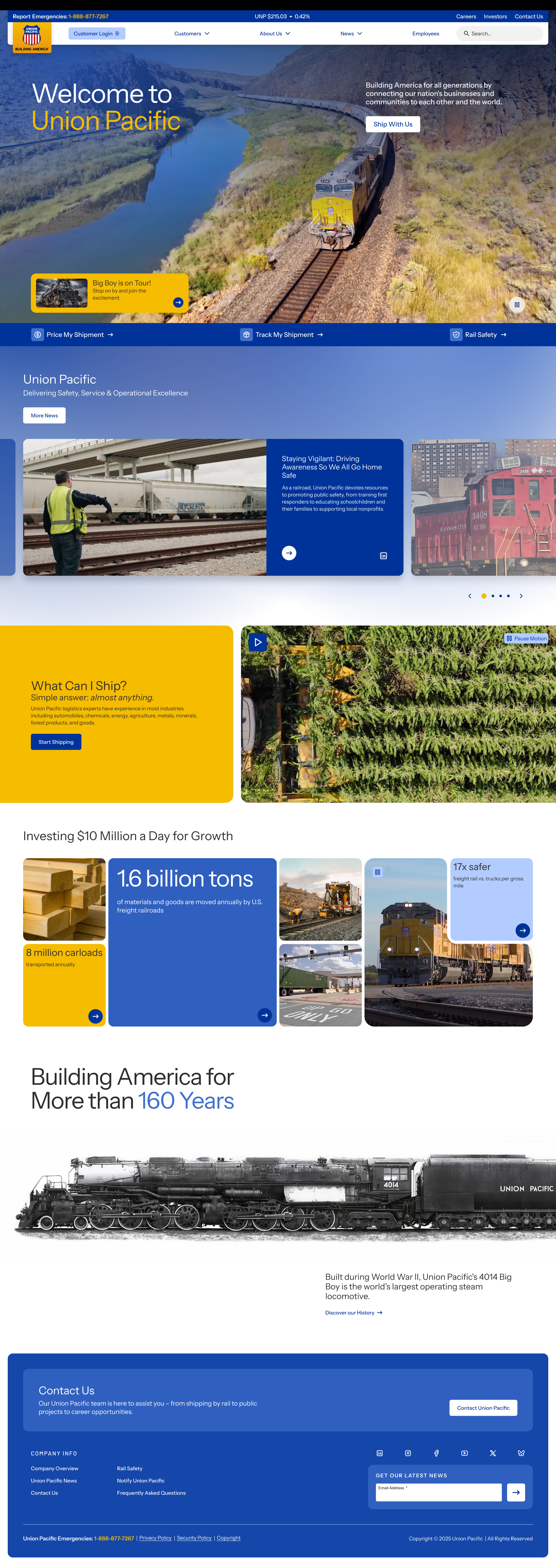
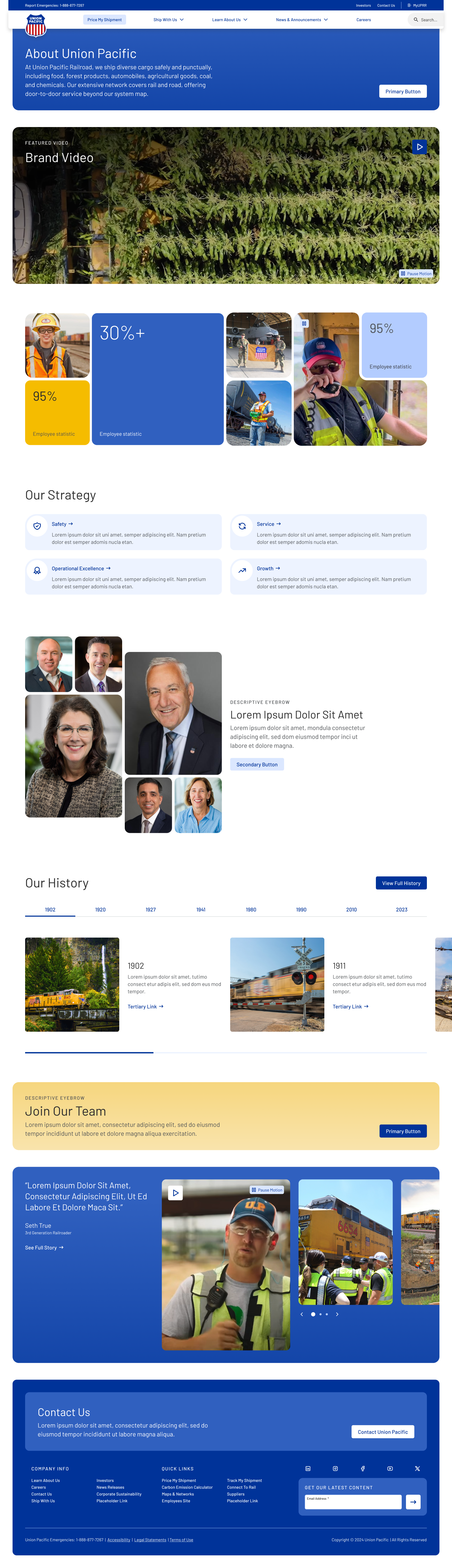
A customer-first homepage that surfaces shipping actions in the hero and tells Union Pacific's national-scale story below — built entirely from the new pattern library so every section reads as one cohesive system.

Design System
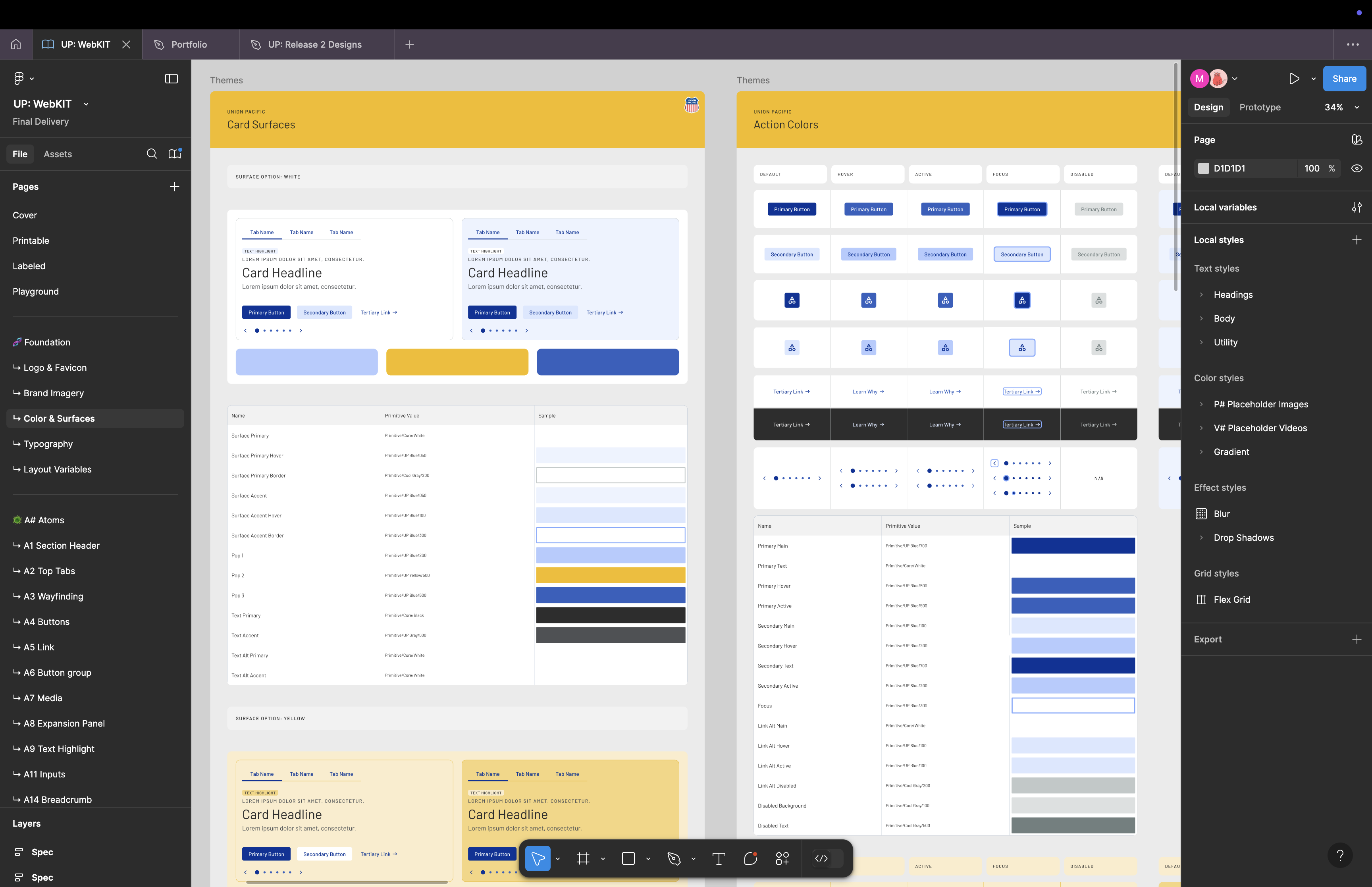
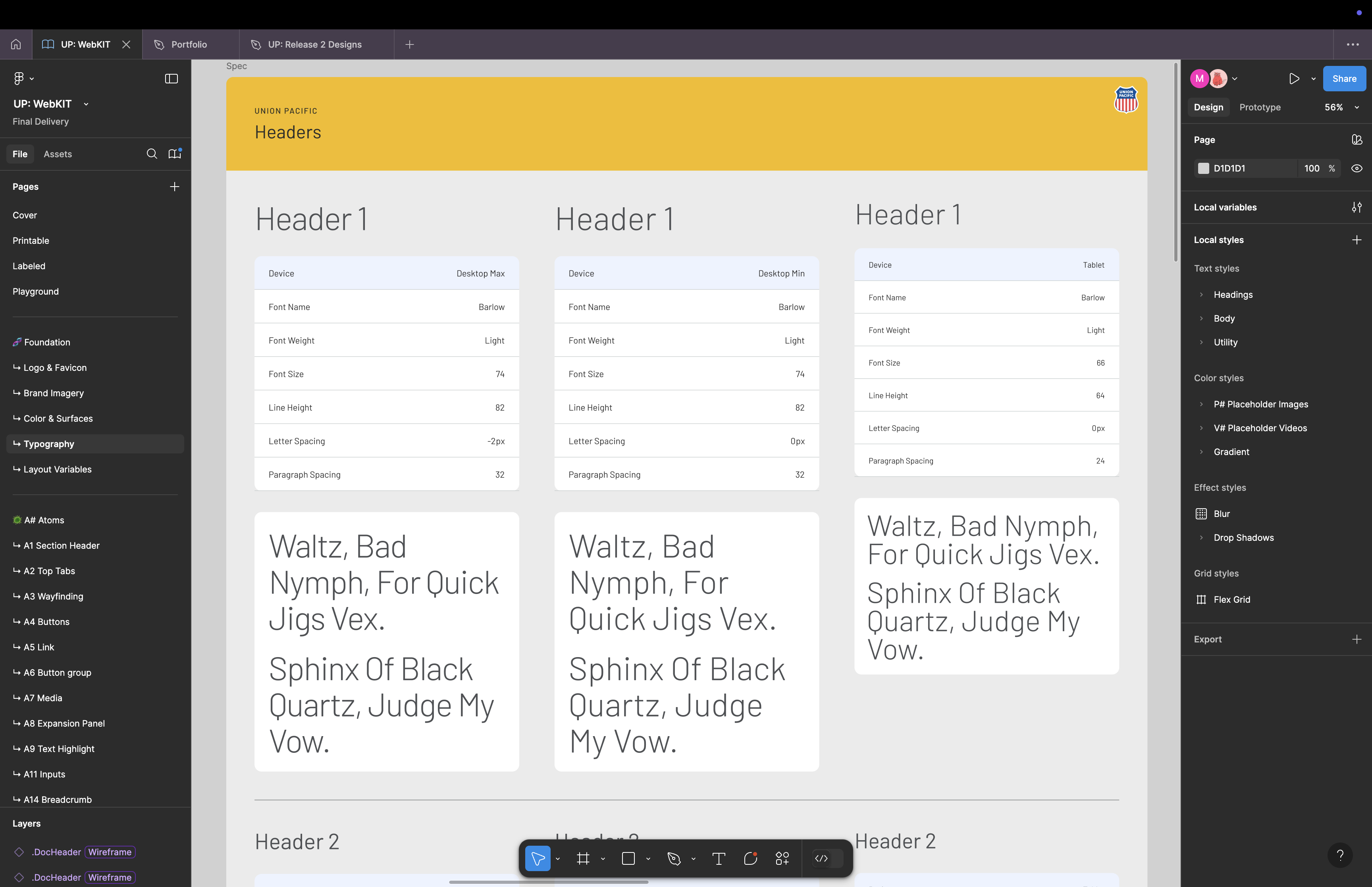
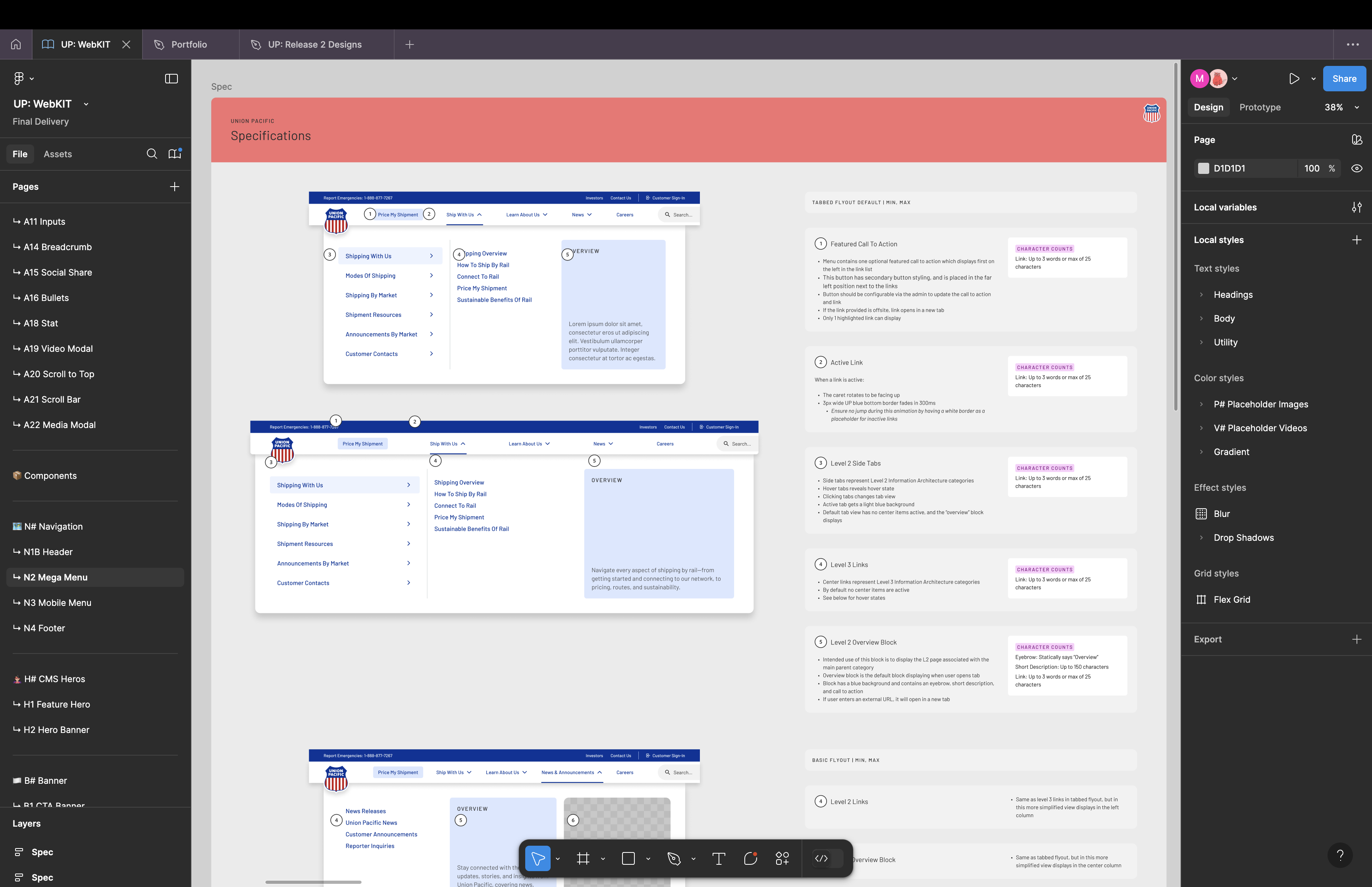
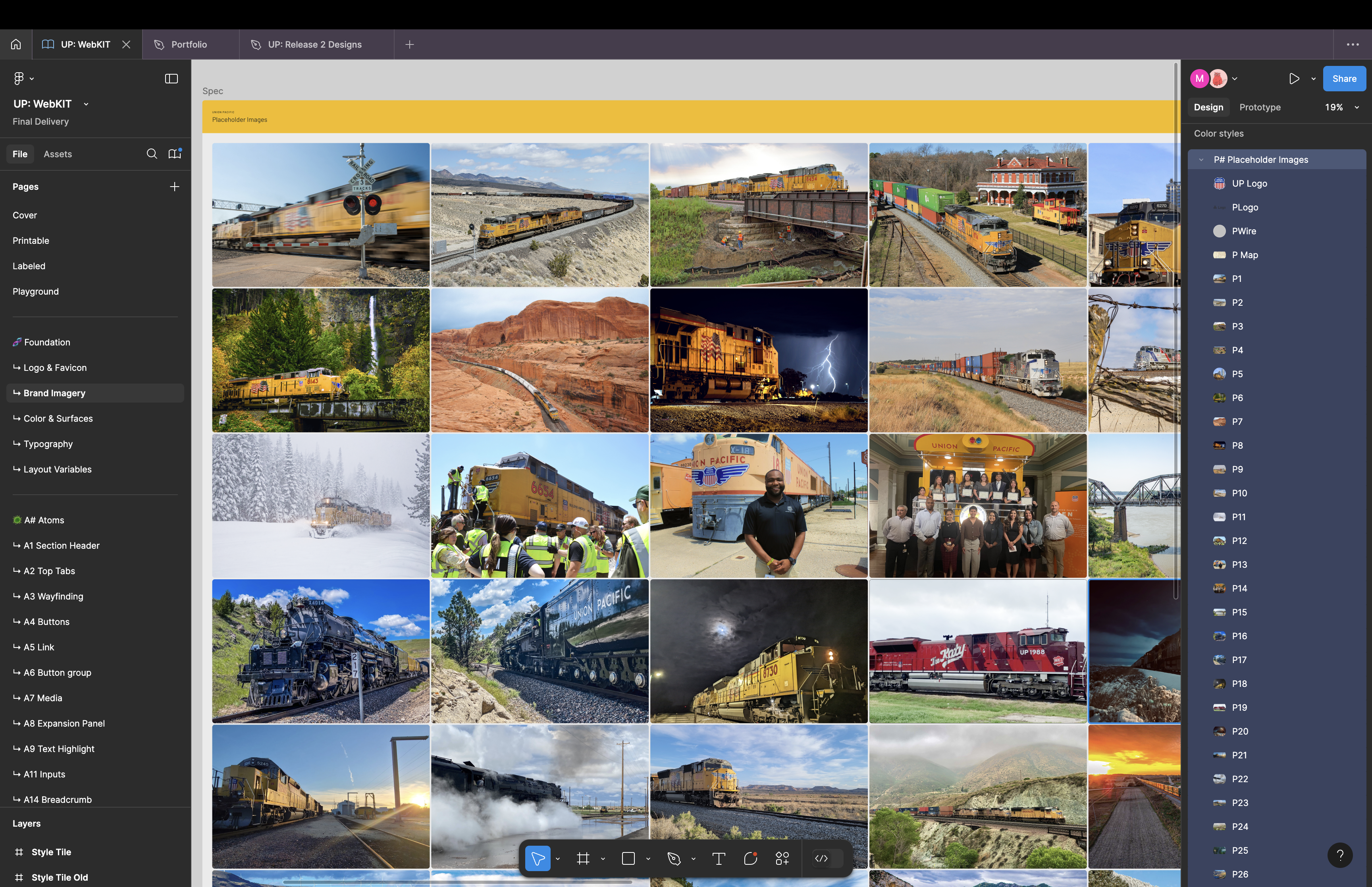
The 50-component pattern library — typography, color, spacing, button states, form controls, navigation, and content blocks — built in Figma with variables and one responsive variant per pattern.
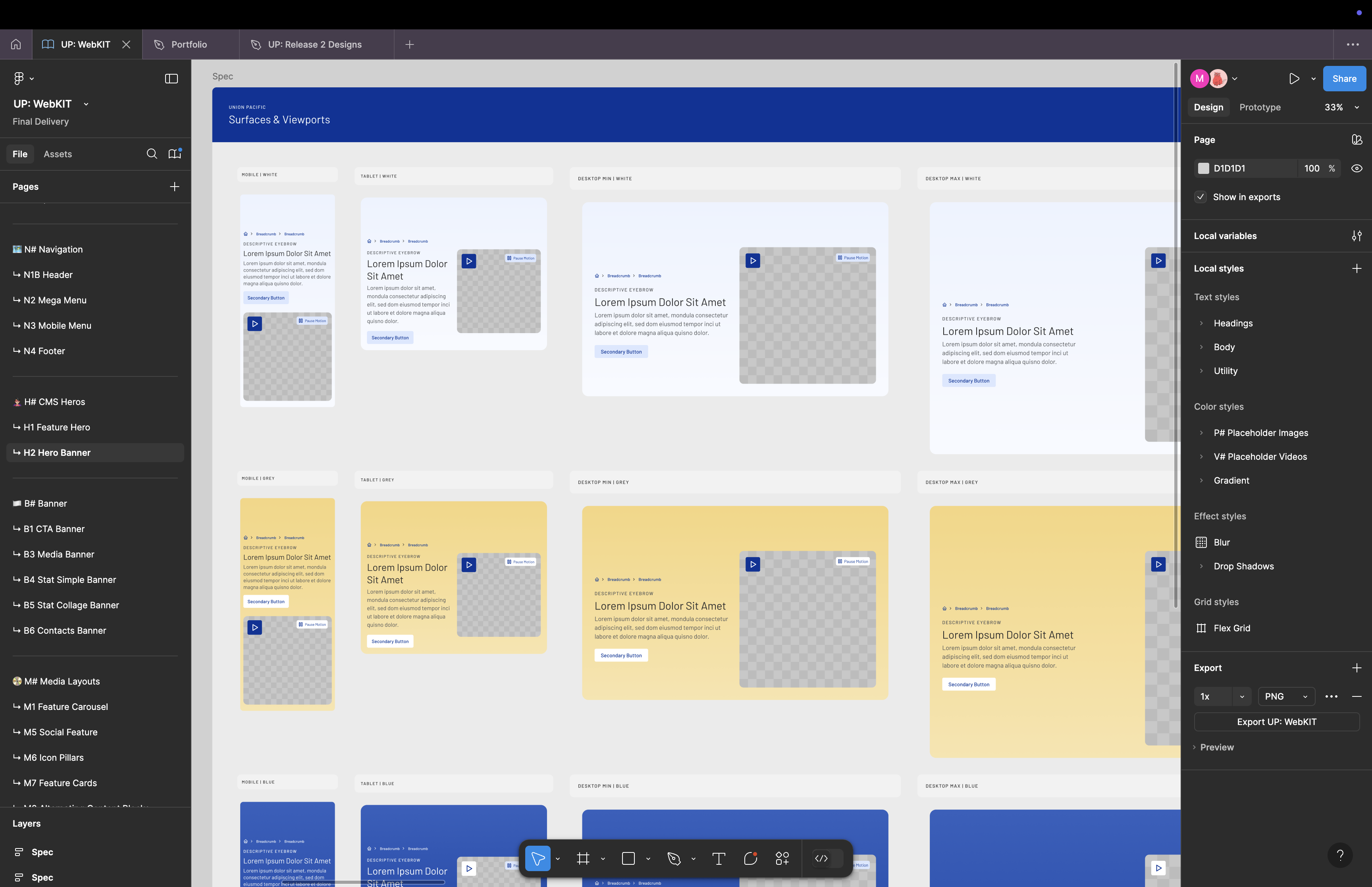
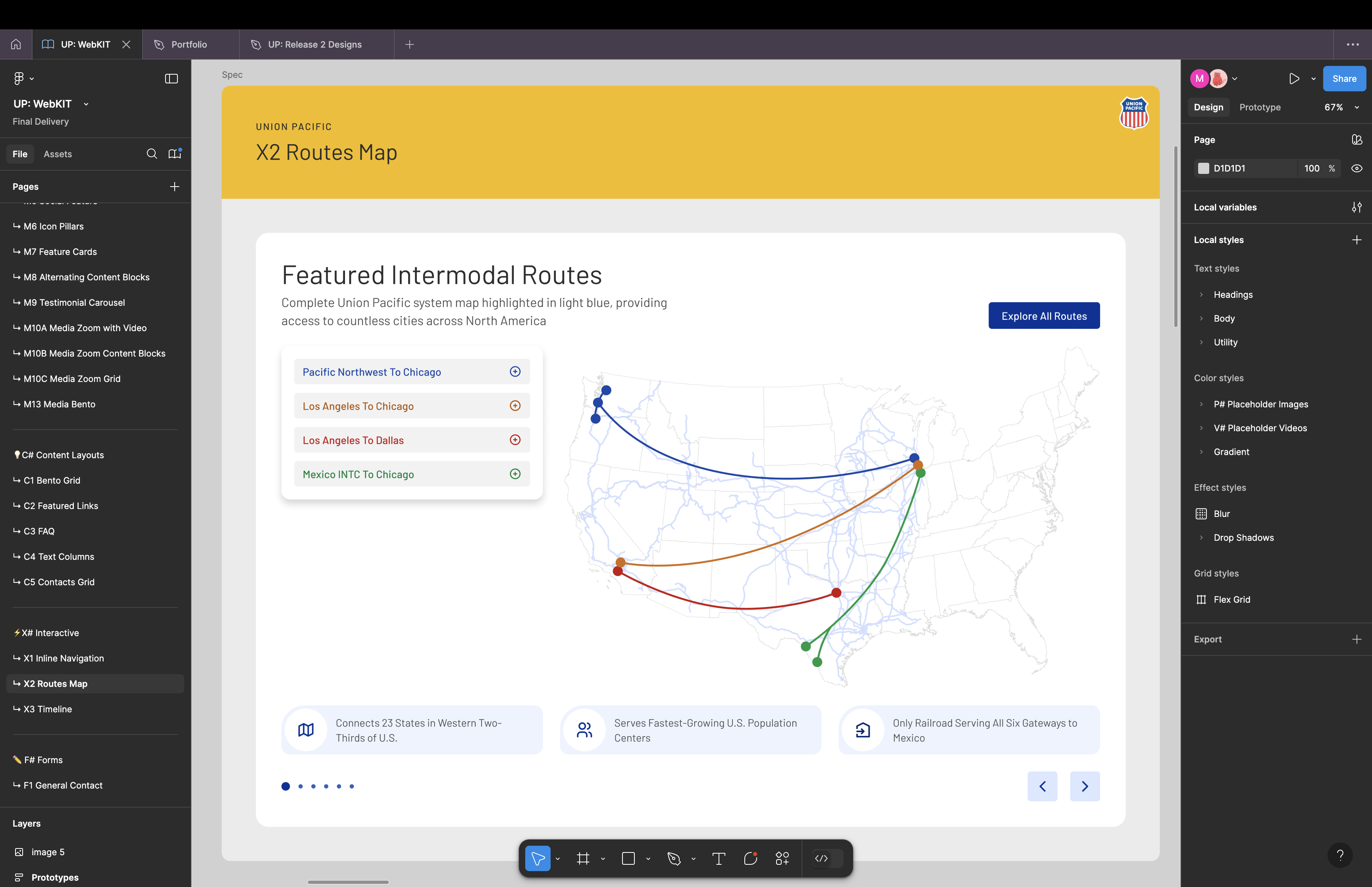
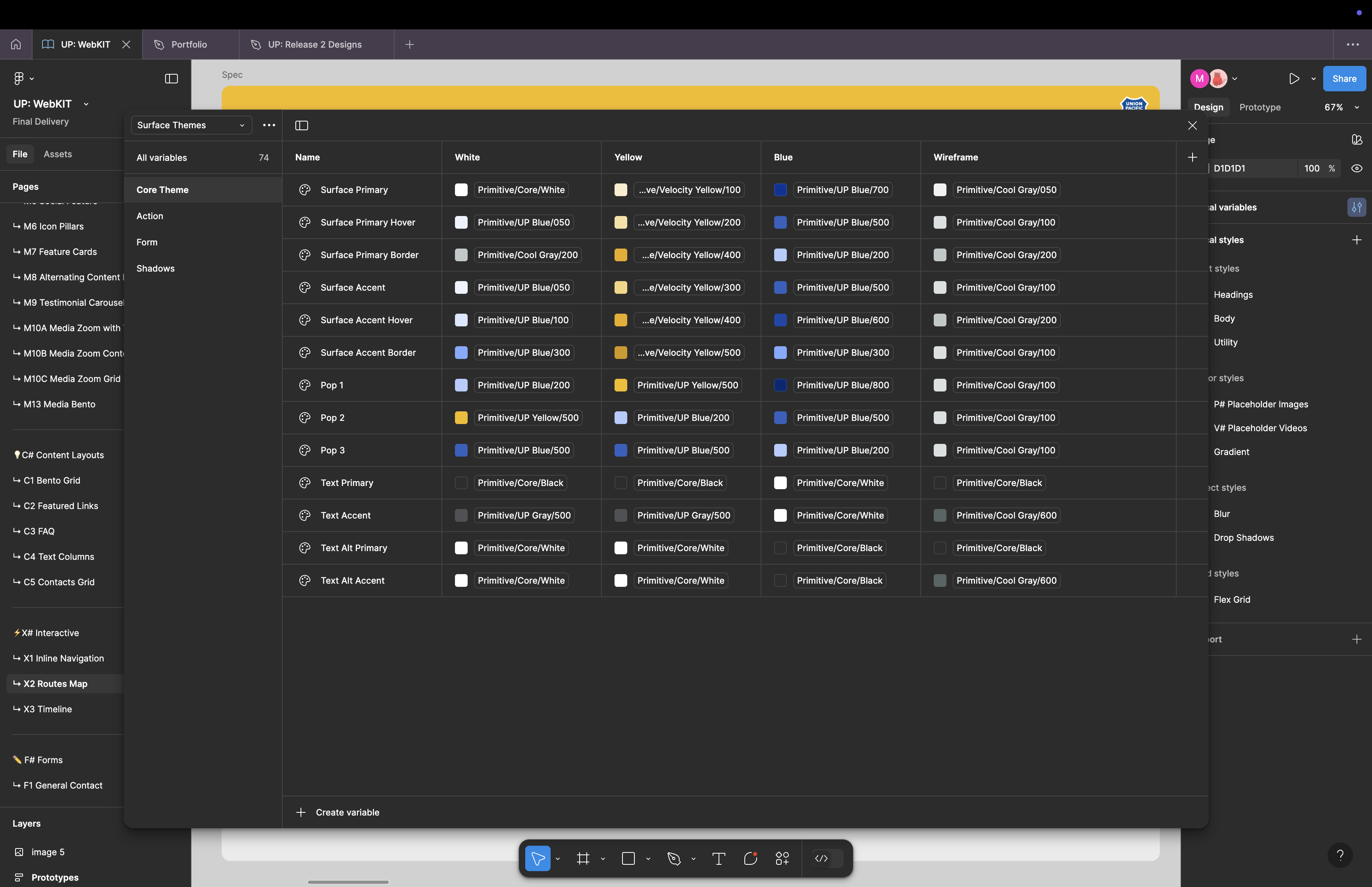
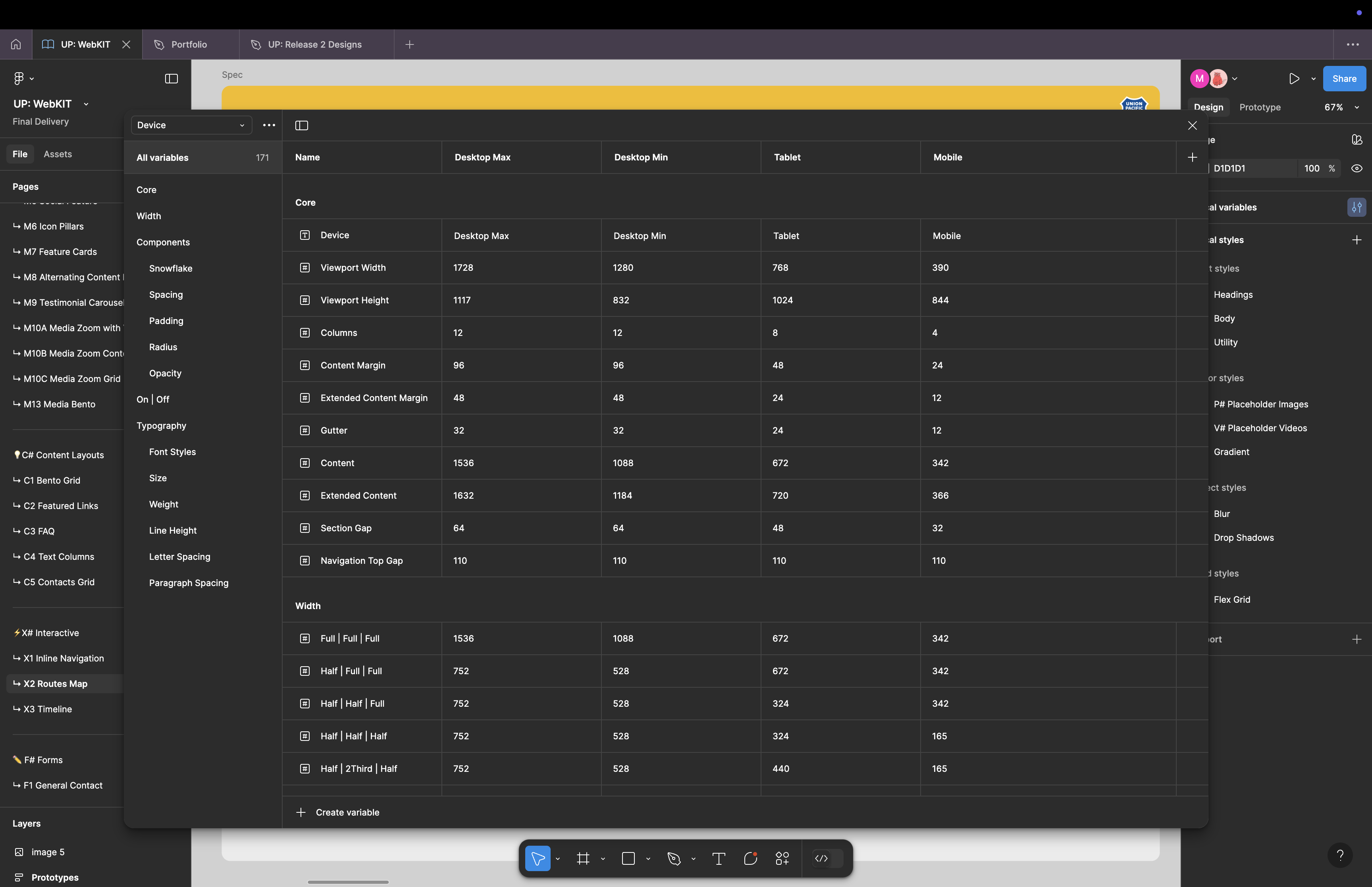
design
About Union Pacific

Challenge
Modernize the Brand Without Losing It. Union Pacific had a globally recognized identity, but the existing system was outdated and inconsistently applied. The work needed to feel current without breaking the recognition the brand had built.
Solution
I led the conceptual rebrand: same logo, same core palette, but a refined system of typography, spacing, motion, and component patterns that brought the brand into a modern era. The brand system and the design system were defined in parallel so they couldn't drift apart at scale.
Challenge
The existing Sitecore site had grown to over 10,000 pages — much of it duplicate, abandoned, or out of date.
Solution
Working with the strategy team and Union Pacific stakeholders, I led the IA work that compressed the site to roughly 1,000 pages. We built 20 page templates for predictable content types plus one fully flexible template using the 50-component library, so Union Pacific's team could configure new pages without designer support. Sitecore migration was handled with a mix of automated tooling and manual placement, coordinated across design, dev, and content strategy.
You did a really good job setting up the purpose of the meeting — what we are covering, what is needed, what the expectations should be. This type of introduction will prove especially valuable as we integrate new SMEs.
Challenge
The UP rebuild ran across multiple internal stakeholders, an external Globant dev team, and a steady stream of new SMEs brought in as the work scaled. Stakeholder alignment was the daily risk.
Solution
I led each working session as much through facilitation as through design — framing the purpose, the scope, and the expectations up front. New SMEs could ramp in mid-project without slowing the team down or relitigating decisions.
Before
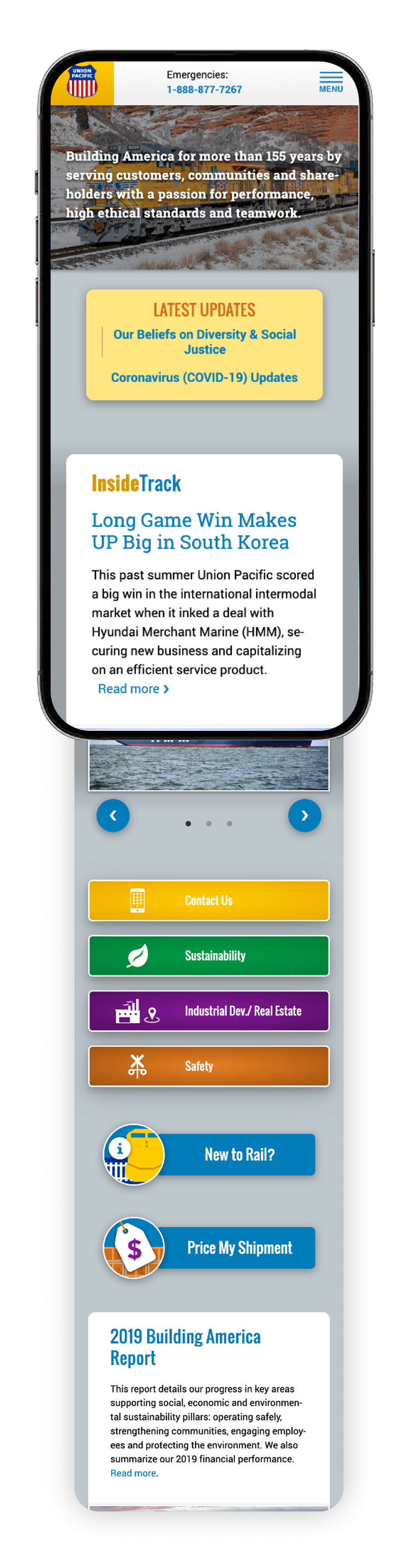
News-article hero drowns out primary call to action
Customer tasks pushed below the fold by editorial content
A stack of 6+ colored CTA buttons diluted every primary action into competing noise
Legacy press-portal aesthetic — dense type, dated palette, no clear visual hierarchy
After
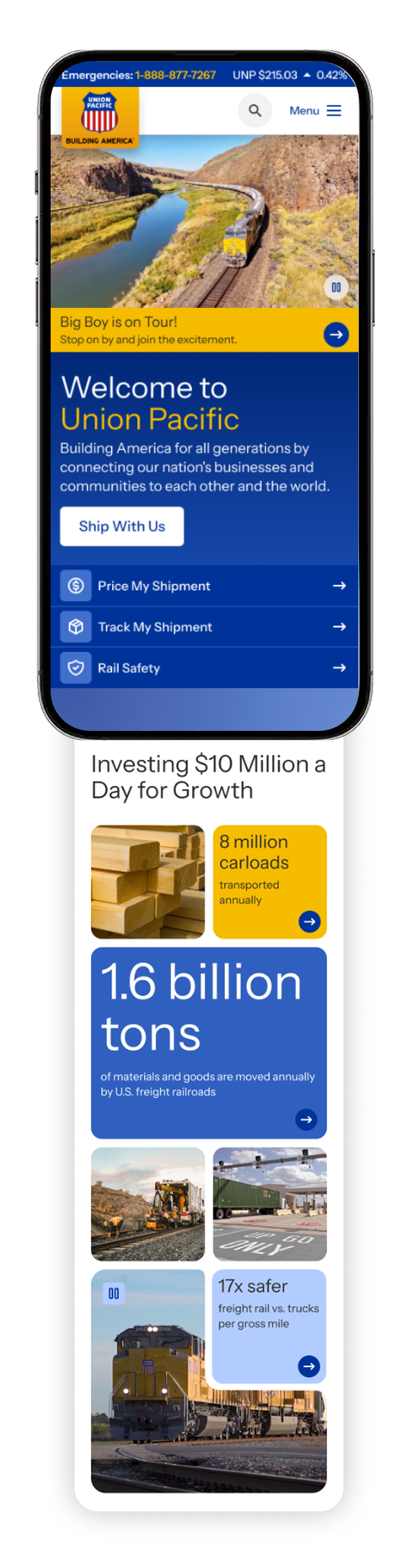
Welcome statement leads with what Union Pacific does for customers — one primary CTA
Customer tasks become the visual priority with three equal-weight cards
Single featured story slot keeps editorial without crowding tasks out of the hero
Scale told in headline-sized stats instead of paragraphs of body copy